

CERTIFIED INDUSTRIAL ENERGY AUDITS
SLASH CONSUMPTION & TARIFF COSTS
Comprehensive Energy Audits That Cut Facility Costs.
Certified ASHRAE Level 1, 2, and 3 energy audits, power quality harmonic diagnostics, and thermal imaging to uncover power wastage, eliminate utility penalties, and slash electricity bills by up to 40% across Dubai & UAE.
Turn hidden electrical waste into verified operational savings and sustainable ROI.
Consult Us Now
ACCREDITED STANDARD
ASHRAE LEVEL 1, 2 & 3 COMPLIANCE
Up to 40%
FACILITY ENERGY BILL
REDUCTION POTENTIAL
REDUCTION POTENTIAL
< 18 Mos
AVERAGE PAYBACK ON
IDENTIFIED ECMS
IDENTIFIED ECMS
ISO 50001
ENERGY MANAGEMENT
SYSTEM ALIGNED
SYSTEM ALIGNED
Company Experience
Our Commercial & Industrial Energy Audit Experience
Commercial buildings, manufacturing plants, and cold storage logistics hubs across the UAE consume enormous amounts of energy — with up to 30-40% wasted through inefficient chiller sequencing, uncorrected power factor penalties, compressed air leaks, and poor building envelope insulation. Petronix Solar provides certified energy auditing services that unlock massive cost savings.
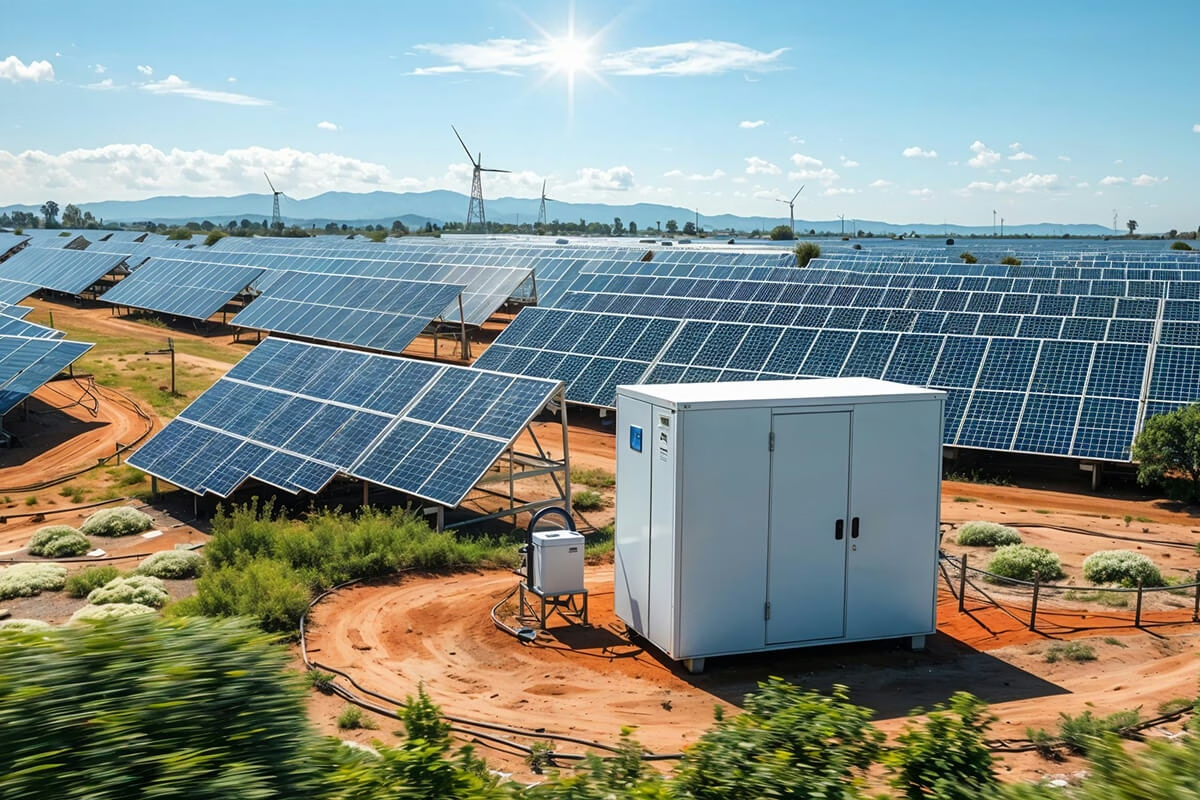
Our Certified Energy Managers (CEM®) conduct rigorous ASHRAE Level 1, 2, and 3 audits using high-precision data loggers, power quality analyzers, and FLIR thermal imagers. Before building a solar installation, conducting an energy audit ensures your facility operates at peak efficiency — allowing for perfectly sized solar systems that deliver the highest possible financial returns.
What We Offer
Our Energy Audit & Optimization Services
Systematic engineering assessments that diagnose energy waste, eliminate power factor penalties, and build actionable cost-reduction roadmaps.
ASHRAE Level 1, 2 & 3 Energy Audits
From initial walkthrough screening to comprehensive investment-grade audits with detailed energy balance modeling and verified financial metrics.
Read More
Power Quality & Harmonics Analysis
Class-A power quality logging identifying Total Harmonic Distortion (THD), phase imbalance, voltage sags, and sizing automatic capacitor banks to stop power factor penalties.
Read More
Thermal Imaging & Envelope Inspection
Infrared thermographic surveys uncovering air infiltration, thermal bridging, defective insulation, and overheating electrical switchgear before failure.
Read More
HVAC & Chiller Plant Optimization
Chilled water temperature resets, variable speed drive (VFD) controls, cooling tower fan modulation, and air handling unit (AHU) optimization.
Read More
Energy Conservation Measures (ECM)
Prioritized capital expenditure roadmap categorizing low-cost behavioral modifications, medium-term equipment retrofits, and high-ROI investments.
Read More
Solar PV Capacity Optimization
Correlation of 15-minute interval electrical load profiles against solar irradiance curves to design perfectly sized PV systems that maximize self-consumption.
Read More
Why Choose Us
Why Choose Petronix Energy Audits
Measurable Energy Savings Backed By Real Engineering Data
We don't provide theoretical estimates. Our energy audit reports are based on on-site sub-metered telemetry, calibrated power analyzers, and proven engineering calculations that guarantee verified reductions on your monthly utility bills.
Up to 40%
Energy Bill Reduction
< 18 Mos
Average ECM Payback
Certified Energy Managers (CEM®)
Audits led by internationally accredited energy professionals with decades of GCC industrial experience.
NIST-Calibrated Test Instruments
We deploy high-accuracy Fluke power loggers, ultrasonic flow meters, and radiometric thermal cameras.
Investment-Grade Financial Analysis
Every proposed measure includes clear CAPEX estimates, annual kWh savings, Simple Payback, and Net Present Value (NPV).
Integrated Solar & Efficiency Synergy
By optimizing energy efficiency first, we design right-sized solar PV systems, minimizing initial capital requirements.

FAQ'S
Frequently Asked Questions
What is the difference between ASHRAE Level 1, 2, and 3 audits?
An ASHRAE Level 1 audit is a preliminary walk-through and utility bill benchmark that spots immediate low-hanging fruit. Level 2 is a comprehensive detailed audit involving on-site data logging and detailed end-use energy breakdowns. Level 3 is an investment-grade audit with rigorous sub-metering suitable for capital financing and performance contracting.
How do power factor penalties affect commercial electricity bills in UAE?
Utility providers like DEWA penalize facilities operating with a power factor below 0.90 to 0.95 due to reactive power losses in inductors and motors. Installing properly sized automatic power factor correction (APFC) capacitor banks eliminates these penalties completely, often paying for itself within 6 to 12 months.
Why should an energy audit precede a solar PV installation?
Conducting an energy audit first helps eliminate unnecessary facility energy waste (such as poorly scheduled chillers or leaking air lines). This reduces your baseline demand, preventing you from over-investing in an oversized solar PV array and delivering the shortest overall capital payback.
How long does an on-site energy audit take?
On-site data logging typically takes between 3 to 7 business days, depending on facility scale and the number of electrical distribution boards (MDBs/SMDBs) to be monitored. The final engineering report with financial business cases is delivered within 2 to 3 weeks.
Will our factory or business operations be disrupted during the audit?
No. Our electrical engineers use non-intrusive Rogowski coil current clamps, infrared cameras, and external ultrasonic flow meters that do not require plant shutdowns or electrical disconnections.
Do you assist with implementing the recommended Energy Conservation Measures?
Yes. Beyond delivering the audit report, Petronix Solar can serve as the implementation contractor or project manager, executing VFD retrofits, capacitor bank installations, chiller controls, and solar PV integrations with verified Measurement & Verification (M&V) guarantees.
Ready to Cut Your Facility's Power Costs?
Schedule an initial walkthrough or discuss an ASHRAE audit for your manufacturing plant, warehouse, or commercial building with our certified energy engineers.
Request An Energy AuditOur Testimonials
Verified Savings for UAE Industries
“The ASHRAE Level 2 audit conducted by Petronix Solar uncovered severe harmonic distortion and power factor penalties across our injection molding lines. Rectifying this saved us AED 210,000 annually, paying for the capacitor banks in just 7 months.”

Adel Al-Ghurair
Factory General Manager, Al Quoz Industrial Area
“Their chiller plant optimization audit and thermal envelope imaging showed us exactly where our cooling energy was escaping. Implementing their recommended ECMs dropped our summer cooling power bills by 32%.”

Christian Meyer
Director of Engineering, Luxury Hotel Group
